


Why Do Fabric Printers in India Ask for 100 Meter Minimum Orders?

If you’ve ever contacted a fabric printer in India, you’ve probably heard this sentence:
“Minimum order is 100 meters for one design.”
Sometimes 300 meters. Sometimes even 500.
And most customers react the same way:
“But I only need fabric for one outfit…”
So why does this happen? Are printers just unwilling to help small customers?
Not really. The reason is more about how the textile industry traditionally works.
Fabric Printing Was Built for Factories, Not Individuals
Most textile printing systems in India were designed decades ago with one type of customer in mind — manufacturers.
Large clothing brands produce hundreds or thousands of garments in the same design. For them, printing 100 meters is actually a small order.
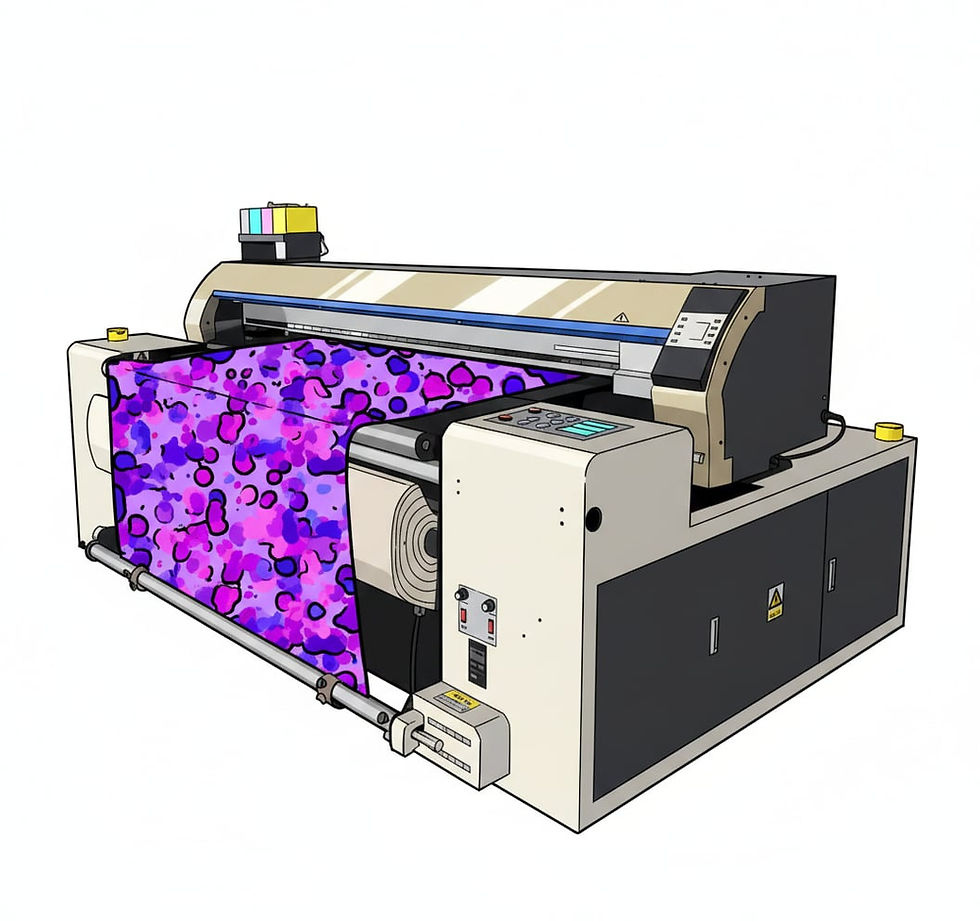
Printing machines are set up to run long batches because setup takes time, labor, and calibration. Once a machine starts running, it becomes economical only when large quantities are printed.
So printers naturally set high minimums to make production efficient.
From an industrial perspective, it makes sense.
From a customer’s perspective, it feels impossible.
The Problem for Regular Customers
Today, the market has changed.
Not everyone wants mass production anymore.
Many people just want:
fabric for one dress,
a small boutique collection,
a trial run before launching a brand,
or a unique outfit that nobody else has.
But when every supplier asks for 100 meters, customers start believing custom printing is only for big businesses.
I’ve spoken to many customers who almost gave up on their ideas because of this.
Technology Has Changed — Expectations Haven’t
Here’s the interesting part.
Printing technology has evolved. Smaller runs are now possible when workflows are designed differently.
But much of the industry still follows old bulk-production models.
That’s why you’ll often hear “minimum 100 meters” even when customers only need 5.
It’s not always about capability — sometimes it’s just about habit.
A Different Way to Think About Printing
We noticed that most inquiries were coming from individuals, not factories.
People didn’t want warehouses full of fabric. They wanted flexibility.
So instead of asking customers to match industrial quantities, we structured printing around real usage — allowing orders starting from 5 meters, which is roughly what one outfit requires.
And because many customers like options, we even allow splitting those 5 meters into two different designs.
The idea is simple: printing should adapt to creativity, not restrict it.
So Why Do Minimums Still Exist?
High minimum orders still exist because bulk manufacturing will always be part of the textile industry — and that’s perfectly fine for large brands.
But today, there’s also space for smaller creators, boutique owners, and individual customers who want something custom without committing to massive quantities.
And slowly, the industry is beginning to move in that direction.
The Takeaway
If a printer tells you the minimum is 100 meters, it doesn’t mean your idea isn’t possible.
It just means you’re talking to a system designed for mass production.
Small-quantity printing isn’t unrealistic anymore — it simply requires a different approach.
And sometimes, all you really needed was someone willing to print fabric the way customers actually use it.
If you're looking for some design ideas, check our website. And make sure you check out our georgette satin collection.


Comments